Posted in Uncategorized

When Fandoms Rage Against the Dying of the (Perceived) Light

By Pete R.

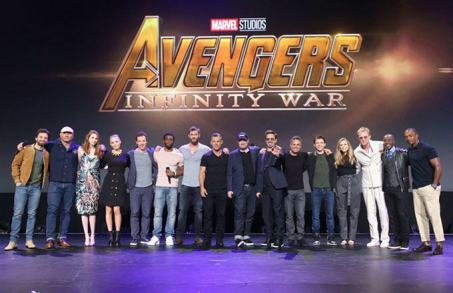
There are seismic changes happening within many different fandoms. Abe Riesman at Vulture wrote a fantastic article about how his tweenage sister represents the new face of comic fans; the top selling comics and graphic novels now are geared towards kids and teens and are not linked to Marvel or DC. Meanwhile, many people of all ethnicities, ages, genders, orientations have become comic fans through the Marvel or DC (mostly Marvel) cinematic universes. This fanbase is creating something––and expecting different things––than the fanbase that grew out of the comic book store. Buck-Cap FanFic never would have come out of Marvel’s print runs of Captain America, but is almost necessitated by the chemistry between Chris Evans and Sebastian Stan. At the same time, a Marvel exec back in April suggested that sales of comic books were slumping because there was “too much diversity” in their lineup.
the-avengers-infinity-war
I’m overwhelmed by the diversity.

As fandoms continue to grow and change, industries will (and will need to) grow and change to meet their needs. Yet at the same time, older fans might resent the new fans, or the changes that are occurring in their media. The current rhetoric of the GOP and the alt-right only intensify a feeling of assault on all sides for white men, and their last bastions of supremacy––comic books, video games––are being in their eyes co-opted. This is especially true with the total victory of nerd culture in the last decade. In a short amount of time, something that was mocked has become something nearly universally celebrated. Just look at how the Star Wars fans are portrayed in Fanboys and compare that to the cheering throngs waiting for A Force Awakens, Rouge One: A Star Wars Story, or the upcoming The Last Jedi. Previously, being a nerd was hard and gave those who went through the experience a shared sense of solidarity. Now that everyone can celebrate their inner geek without going through serious trials and tribble-ations, the old guard has a feeling of resentment and possessiveness. This is the new phase of the toxic “questioning and testing the geek-girl’s credentials” that shows up in movies like Fanboys and happens constantly in real life.
download
“That was a horrible joke.” – Captain Kirk, probably.

Laying my cards on the table: the changes we’re seeing are clearly for the best. Culture is not zero-sum. Women creators are not “taking jobs away” from men. Telling stories about women or queer people or people of color (or queer or female people of color) is not somehow hurting white men. There will be plenty of media for white men to consume where they (we; I’m a white man) get to be the heroes and the point of view characters. I’m writing this shortly after the BBC announced that the 13th incarnation of Doctor Who will be a women. I am sad that Peter Capaldi is leaving and excited to see what Jodie Whittaker brings to the role. But unfortunately, others have been and will continue to rage against what they see as the dying of “their” culture.

jodie_doctor_who
The Doctor has two hearts and has been played by 12 other people, but somehow having a space alien played by a woman is an existential threat to some people.

Discussing fandoms requires looking at both the positive community that fandoms create and the toxic environments they can foster. If you’re planning on discussing fandoms in an academic setting with students or teens, make sure to look at the problems that can occur within fandoms. Even if you’re not planning on discussing it formally, being aware of the dangers of toxic fandoms is important when interacting with any teen who is involved in fandoms, especially women, teens of color, and LGBT teens. They may have found a safe community to revel in, or they may have stumbled into a harmful community that harasses them. Sometimes those communities are one and the same. Hopefully we can help teens navigate the pros and cons of whatever brings them joy and help guide the next generation of fans to be open, inviting, and willing to accept whatever change inevitably continues to come down the pipeline.


Posted in episodes

Episode 13: Fandom in Media

The homework for the episode:
Martha: Fangirl by Rainbow Rowell
Calee: Fanboys, 2009 film directed by Kyle Newman
Pete: Galaxy Quest, 1999 film directed by Dean Parisot

A new freshman in college finds refuge from all the change in her life in the book series she’s loved for years, and the fanfiction she writes for it.

A group of friends embark on a cross-country road trip to break into Skywalker Ranch so their dying friend can see The Phantom Menace before he goes.

The cast from a classic sci-fi tv show are recruited to help a very real group of aliens defeat the nemesis that slaughtered their people.

Today’s episode is brought to you by fanculture everywhere. Join us as we take a deep dive into fandom and how media portrays it, from the perspective of male and female fans and even a bit from the creator side.

Your podcasters’ credentials:

Pete: Two YouTube videos: Angelo Badalamenti describes creating “Laura Palmer’s Theme” from Twin Peaks and Alex Jones as Bon Iver
Martha: Watching her husband play Serial Cleaner
Calee: Mouseguard: Legends of the Guard by David Peterson

Pete cheats YET AGAIN, Martha is basically living inside a Twitch stream, and Calee has discovered the wonderful world of anthropomorphized mice. (J/K she’s probably read Redwall before.)

Thoughts to Think on for The Hero’s Journey

  1. Is fandom portrayed generally positively or negatively in the homework we discuss?
  2. What does fandom add to the conversation surrounding a piece of pop culture?
  3. What, if any, responsibility do creators have toward their fans?
  4. Why is fandom relevant? Why should we care?

We are all fans of something, but it is fair to say that we were NOT fans (ha) of Fanboys, although it provides a rich vein in which to explore toxic fandom and how deeply, deeply dated pop cultural humor can be. We get a little side-tracked and don’t fully explore the idea of plagiarism, copyright infringement, and fanworks, although Martha is willing to admit she’s a big ol’ hypocrite when it comes to Teefury t-shirts. We do finish strong by touching on the relevancy of fandom and how it has moved out of the dark corners of geekdom and into the light because hey, we’re all fans of something around here. (We also get through the entire episode without talking about The Big Bang Theory, which I’m counting as a win.)

Next episode, Pete’s taking us on a guided tour of what it means to be a good leader, what being a bad leader means for a group or organization, and in general, Leaders and Leadership. Plus Martha’s making you read ANOTHER book (but this one’s for kids, and it’s great). Have fun doing your homework!

Your homework for August 2:
Martha: Mrs. Frisby and the Rats of NIMH by Robert C. O’Brien
Calee: Firefly, episode 1.09: “Ariel”
Pete: Superman: Red Son by Mark Millar

And remember, if you have questions, comments, or ideas for a show, give us a shoutout here or send us an e-mail to show@homeworkpodcast.com. We’d love to hear from you!

Posted in supplementary material

Episode 13: Fandom in Media, Pre-Reading

(Written by Martha S.)

I’ve been a fan of things my whole life.

I wouldn’t say I’m always a part of fandom, since my participation levels vary based on my enthusiasm and my desire to engage with other humans, but I watch and I lurk and I read the fanfiction and I look at the fanart. When I love something, a movie or a book or a video game, I’m reluctant to give up the worlds I’m in love with. Fandom means I don’t have to leave until I’m done with them.

I chose fandom in media as our topic for the next episode for a few reasons: I thought we earned a lighter, more fun subject after bending our brains in the last episode, and because fandom culture has become so pervasive in the pop culture dialogue that I think it deserves a deep dive. Why do people engage in fandom? What rewards does it offer? Why is it worth talking about?

Our homework for this episode:

Fangirl, 2013 novel by Rainbow Rowell
Fanboys, 2009 film directed by Kyle Newman
Galaxy Quest, 1999 film directed by Dean Parisot

We have a good spread of homework that looks at fans active in fandom, fans passionate about fandom, and the people fandom focuses on. I’d like to offer you some optional extra credit as well, to get a good taste at the good – and the bad – of what fandom can offer.

The story of the infamous MsScribe. MsScribe was a prominent figure in Harry Potter fandom around 2003. Her story is sordid, long, and entertaining in a “I can’t believe this actually happened” kind of way.

For Women of Color, the Price of Fandom Can Be Too High,” article by Angelica Jade Bastien. This article is a pretty ugly look at the more toxic aspects of fandom, which are important to understanding the impact fandom has on actual human lives.

The Big Questions we’ll be considering on Wednesday:

  1. Is fandom portrayed generally positively or negatively in the homework we discuss?
  2. What does fandom add to the conversation surrounding a piece of pop culture?
  3. What, if any, responsibility do creators have toward their fans?
  4. Why is fandom relevant? Why should we care?
Posted in syllabus

Hero’s Journey: Syllabus

Chapter 19 of The Silmarillion, Beren and Luthien (1977 novel written by J.R.R. Tolkien, and edited by Christopher Tolkien)

The Book of Life (2014 movie directed by Jorge Gutierrez)

The Hero With a Thousand Faces (1949 book by Joseph Campbell)

Mass Effect 1, 2, 3 (Bioware video game series first released in 2007)

Pokemon (Series of Nintendo video games first released in 1996 for the Nintendo Gameboy)

The Power of Myth (1988 documentary and subsequent book published in 1988)

Shrek (2001 movie directed by Andrew Adamson and Vicky Jenson)

Star Wars (1977 film directed by George Lucas and starring Mark Hamill, Harrison Ford, and Carrie Fisher)

Tomb Raider (Crystal Dynamics video game released in 2013)

Posted in Uncategorized

A wide-ranging discussion of the monomyth (with a bonus Star Wars aside)

(Written by Pete R.)

This is going to be a bit of a wide-ranging blog post. I’ve been deeply interested in Campell’s idea of the monomyth since college, where I read both The Hero With a Thousand Faces and The Power of Myth, a series of interviews he did with Bill Moyers. What captured me almost immediately was an idea that I mentioned briefly in the episode: the idea that cultures around the world developed myths independently from each other that still map roughly to this one general story structure. I’m interested in comparative mythology, and Campbell uses a wide variety of cultures and myths to illustrate his ideas.

But, I think it’s fair to at least mention a few of the criticisms of the monomyth. First, it’s deeply steeped in Jungian ideas. If that’s not your cup of tea, you might have a hard time with the more deeper esoterica of what constitutes the Apotheosis or Attonement with the Father. Since the Initiation phase of the journey so often takes place in strange and magical lands––the Underworld is a common location––there is often a heavy layer of symbolism that could be ascribed to the actions that take place during the phase. You can take them at face value, or delve into Jungian analysis of them; Campell does the latter in The Hero With a Thousand Faces.

The second is that the Hero’s Journey is often more accurately the Male Hero’s Journey. Campbell is able to use a number of female heroes in his analysis––the Ishtar myths from Mesopotamia form the backbone of a lot of the book––but Campbell himself was aware of this issue. Late in his life, he wrote:

All of the great mythologies and much of the mythic story-telling of the world are from the male point of view. When I was writing The Hero with a Thousand Faces and wanted to bring female heroes in, I had to go to the fairy tales. These were told by women to children, you know, and you get a different perspective. It was the men who got involved in spinning most of the great myths. The women were too busy; they had too damn much to do to sit around thinking about stories.

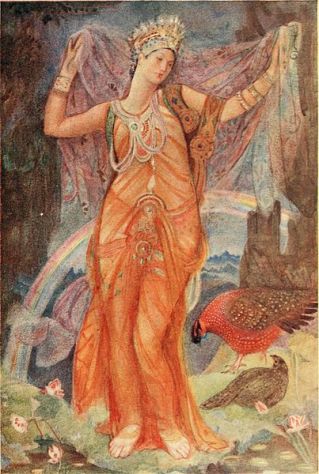
Myths_and_legends_of_Babylonia_and_Assyria_(1916)_(14801964123)
Ishtar/Inanna was a Mesopotamian goddess. Her myth of descending to the Underword is a major myth analyzed in The Hero With a Thousand Faces,

When introducing students and young adults to the idea of the Hero’s Journey, keep these criticisms in mind. Select examples that portray women as the heroes––which we mostly failed to do in the episode, although Lúthien somewhat fits the bill––is critical to providing a wide representation AND showing that the Hero’s Journey can be more than just the Male Hero’s Joruney. And encourage students and young people to think critically about the structure. Does it still work in media like comics, or do we need a new myth structure to engage with the quintessential American Myth?

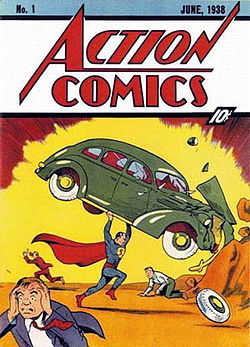
Action_Comics_1
Can Superman be mapped to the Hero’s Journey, or do we need a new story structure?

Finally, encourage students to use the Hero’s Journey as a schema to think of stories, rather than a template that needs to be followed. As Neil Gaiman wrote:

I think I got about half way through The Hero with a Thousand Faces and found myself thinking if this is true—I don’t want to know. I really would rather not know this stuff. I’d rather do it because it’s true and because I accidentally wind up creating something that falls into this pattern than be told what the pattern is.

Exposing young people to the ideas of Campell is good stuff; letting their minds construct the stories they want to construct is even better.

Here’s the part where I talk a little too much about Star Wars.

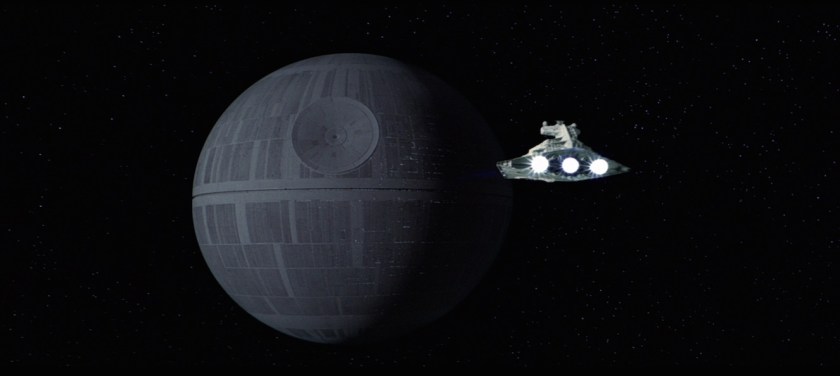
In the episode, we briefly talked about how Star War: A New Hope is a pretty canonical adaptation of the Hero’s Journey. I want to point your way to a book/museum exhibit Star Wars: The Magic of Myth (Amazon for the book). I saw the original exhibit when it first premiered at the Smithsonian Air and Space Museum in the late 90s, when I was deeply in the thrall of all things Star Wars (some things don’t change). I bought (aka: convinced my parents to buy for me) the companion book, which I didn’t really get at that age. But it was my first exposure to the monomyth and Joseph Campbell, and it’s left an indelible mark on me. I still think of the journey to the Death Star through the lens of In the Belly of the Whale phase of the monomyth cycle. This work, combined with Star Wars itself, would make an excellent one-two punch for introducing students to Campbell’s monomyth.

BadFeeling-Episode-IV-Death-Star
That’s no moon… it’s a whale. Or maybe a dragon.

And to address something that came up in the episode: Luke IS a reluctant hero. He SAYS he wants to leave Tatooine, but when the Call to Adventure is presented, he balks and Refuses the Call. He tells Obi-wan that he can take him as far as Mos Eisley, where the old hermit can find passage to Alderaan. It is only after his aunt and uncle are killed by Stormtroopers that he begins his journey by Crossing the First Threshold and entering that wretched hive of scum and villainy that is Mos Eisley. This is his––and the audiences––first entrance into the strange world that is the wider Star Wars galaxy.

maxresdefault
Sometimes, all you need is some Stormtroopers to destroy your home and murder your adopted family to put you on the path to become a Hero.

That’s all I’ll mention about Star Wars in this post. Suffice to say that it is often heralded as THE example of the monomyth for the modern era. If you’re interested in follow-up reading, Salon had an article in 2015 that further expands on these ideas. And honestly, a quick google search for “Star Wars monomyth” or “Star Wars Hero’s Journey” or “Star Wars Joseph Campbell” will net you far more than you need.

Posted in supplementary material

Episode 12 Follow-Up: The Hero’s Journey Goes Digital

(Written by Martha S.)

One of the things we talked about in Episode 12 was why the particular story structure of the hero’s journey has endured for basically the entirety of time – I posited that it’s because basically, this is it, this IS stories. With few exceptions, the hero’s journey stands in for the journey we all travel through during our lives, taking benchmarks and moments we all hit and beefing them up with the fantastic, over-dramatic, or magical. We may not all journey to the underworld or cross a magical threshold, but we do all experience crossing different barriers and boundaries and emerging as changed humans. The hero’s journey gives us a story structure we can relate to almost instantaneously, while also making it fantastical and interesting enough that it feels new or exciting every time we experience it.

I want to explore a medium that we haven’t really had the chance to in our episodes, because our podcast structure makes it very difficult to fairly assign and complete homework of this nature: video games. Video games offer a unique experience in the world of pop culture because they’re not just something you experience, they require your interaction and involvement, whether it’s something as simple as a Mario sidescroller or as complex as a Bioware choose-your-own-adventure. Because of that, they can provide us with the opportunity to not only read about or witness a hero’s journey, but to experience it vicariously yourself through your protagonist.

Troy Dunniway, a video game designer who has worked for Microsoft, Electronic Arts, Ubisoft, and Insomniac Games, among others, wrote a comprehensive article entitled “Using the Hero’s Journey in Games,” where he breaks down how this story structure is beneficial to game designers laying out a game for development. Read the entire thing here, but also pay attention to this quote:

“As a game designer it allows us to utilize a known mechanism or formula within our games that people will understand and associate with easily. This allows us the ability to spend less time explaining ourselves and more time developing the story. The formula for a hero’s journey has been refined over thousands of years, so there is no reason to try and improve it. Instead you should spend your time trying to figure out how to make it new and interesting.”

The hero’s journey is a wheel that doesn’t need reinventing. It’s the actual storytelling that makes the difference.

Supplementary Materials

Mass Effect 1, 2, 3 (Xbox 360, PS4, PC)
The original  Mass Effect trilogy is an interesting animal because not only do each of the games demonstrate many of the hero’s journey story beats, but the trilogy as a whole becomes one massive, 90-hour hero’s journey that you complete. I think one of the reasons so many players had a problem with the end game is that perhaps, they couldn’t see how the fatalistic ending plays back into the mid-game of your Shepard’s HJ; we all made choices along the way, but in the end, the changes Shep went through after passing their event horizon meant there could only be one ending. (For what it’s worth, I enjoyed it, and still don’t think it earned the amount of ire the gaming community flung at it – although without all the ruckus, I wouldn’t have started playing them at all.)

Pokemon, pick your poison (Various generations of Nintendo hand-helds)
A good two-thirds of any given Pokemon game exists in the space between the call to action (receiving your first pocket monster) and crossing the threshold (the point at which whatever legendary beast you’re about to catch changes the world in some way). Most of the gameplay exists in between HJ story beats, and you can put hours of training and catching into the game before the plot rears its head at all – but I do love that each game pretty perfectly encapsulates the “master of two worlds” sub-stage.

Tomb Raider (Xbox 360, PS4)
Lara Croft’s evolution from archaeology student to titular tomb raider. This series pretty successfully achieves an open world format without the freedom of choice that you get from a Bioware game; you have a whole island to explore, and the game won’t stop you from doing that at your own pace, but you will trigger story events when it needs you too. Seeing and participating in Lara’s journey also retroactively gives the older Tomb Raider games more depth of flavor.

Sidebar: I think one of the (many, many) reasons that Dragon Age II doesn’t work is that it can’t decide if it wants to be an HJ or not. Ostensibly, your Hawke is becoming the hero of Kirkwall, but the reality is that the game pretty much forgets about the stages a hero is supposed to go through in any compelling way. By the time the event horizon is even introduced, I wasn’t invested and I didn’t care.

I wanted to include a fighting game here to demonstrate the myriad ways that the HJ can fit into a video game, but I’ll be honest with you: I don’t play that many fighting games and did not feel like I could properly comment on them! Please speak up in the comments: Do games like InjusticeMortal Kombat, and Street Fighter adhere to an HJ structure? Or are they all panache and no depth?

Posted in episodes

Episode 12: The Hero’s Journey

The homework for the episode:
Pete: “Of Beren and Luthien,” chapter 19 of The Silmarillion
Martha: The Book of Life, 2014 animated film directed by Jorge R. Gutierrez
Calee: Shrek, 2001 animated film directed by Andrew Adamson and Vicky Jenson

Two lovers forced to perform impossible tasks before earning their happily-ever-after.

A bullfighter-turned-musician embarks on a magical journey through the land of the dead to reunite with his living love and save his town.

An ogre steps up to reclaim his swamp and finds more than he bargained for on the way.

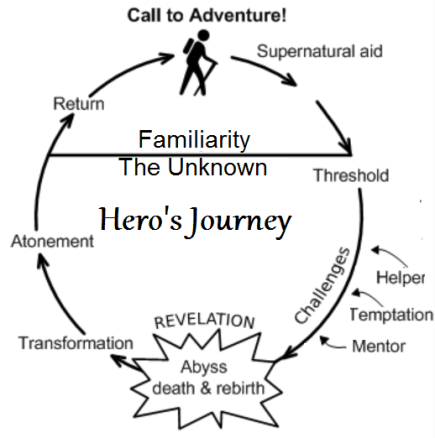
The hero’s journey as a storytelling map has been part of human culture for thousands of years. Joseph Campbell codified it in The Hero With the Thousand Faces, and when illustrated by infographic, it looks a little something like this:

The_Hero's_Journey

The hero’s journey can be broken down into three necessary stages and seventeen substages, because Joseph Campbell is a categorizing animal with an answer to everything. As we note in the episode, not all of these substages show up in every hero’s journey, and frequently they get shuffled around a bit as the story calls for it. In convenient outline form:

  1. Departure
    1. Call to Adventure
    2. Refusal of the Call
    3. Crossing the First Threshold
    4. In the Belly of the Whale
  2. Initiation
    1. Road of Trials
    2. Meeting with the Goddess
    3. Temptations
    4. Atonement with the Father
    5. Apotheosis
    6. The Ultimate Boon
  3. Return
    1. Refusal of the Return
    2. The Magic Flight
    3. Rescue from Without
    4. Crossing the Return Threshold
    5. Master of Two Worlds
    6. Freedom to Live

Your podcasters’ credentials:

Pete: Embassytown by China Mieville
Martha: Bondi Ink Crew on Netflix
Calee: Real Genius

We take a brief detour down the rabbit hole of Val Kilmer’s IMDB page, Martha talks tattoos and Pete is involved in speculative fiction.

Thoughts to Think on for The Hero’s Journey

  1. Admittedly, the hero’s tale is a very formulaic one. How does this aid the narrative, and how does it hinder it? If a tale diverges from this, is it considered better or worse?
  2. Are we cheapening the act of the Return of the hero? Does it mean as much when we expect it?
  3. Why has the hero’s journey become this lasting, resonant storytelling structure?

A lot of our discussion circles around the question: how does a storytelling structure that is so ingrained in us do anything new or innovative? Using Tolkein, Shrek, and an animated celebration of the Day of the Dead (The Book of Life, hey-o) we talk about the elements that make up the archetypal hero’s journey and why it’s important to understanding the way we have and continue to tell stories. We also briefly mention Star Wars, because honestly, I don’t think you can talk about the hero’s journey without at least touching on it.

I dug up this article about why the hero’s journey has particular resonance and staying power, particularly from the perspective of someone creating stories: “Writing and the Importance of the Hero’s Journey,” by Evelyn Bertrand.

Next episode, we’re taking things in a little lighter direction and discussing fandom and how it gets treated by media. Join us for our chat on Fandom in Media and enjoy doing your homework!

Your homework for July 19:
Martha: Fangirl by Rainbow Rowell
Calee: Fanboys, 2009 film directed by Kyle Newman
Pete: Galaxy Quest, 1999 film directed by Dean Parisot

And remember, if you have questions, comments, or ideas for a show, give us a shoutout here or send us an e-mail to show@homeworkpodcast.com. We’d love to hear from you!

Posted in Uncategorized

Episode 12: Hero’s Journey (Pre-Reading)

On this week’s show, we go on an adventure with the Hero’s Journey!!

Homework

1.Shrek (2001 movie directed by Andrew Adamson and Vicky Jenson)

2.Book of Life (2014 movie directed by Jorge Gutierrez)

3. Chapter 19 of the Silmarillion, Beren and Luthien (written by J.R.R. Tolkien, and edited by Christopher Tolkien)

Discussion Questions

1.Admittedly, the hero’s tale is a very formulaic one. How does this aid the narrative, and how does it hinder it? If a tale diverges from this, is it considered better or worse?

2.Are we cheapening the act of the Return of the hero? Does it mean as much when we expect it?

3.Why has the hero’s journey become this lasting, resonant storytelling structure?

We have some fun homework assignments this week, which hopefully will help shake off some of the grief you may have been feeling recently.  You still have two more days to complete your homework, and I know you can do it!

Posted in syllabus

Grief and Grieving: Syllabus

The Babadook (2014 film directed by Jennifer Kent and starring Essie Davis)

Deep Dark Fears (webcomic by Fran Krause, located here)

The Fox and the Hound (1981 animated film directed by Ted Berman, Richard Rich, and Art Stevens)

Frankenweenie (1984 film directed by Tim Burton)

Hannibal, episodes 1.04 (Ouef), 1.09 (Trou Normand), 2.12 (Tome-Wan), and 3.02 (Primavera) (2013 TV series produced by Bryan Fuller)

iZombie, episode 3.10 (Return of the Dead Guy) (currently airing TV show created by Diane Ruggiero and Rob Thomas, and starring Rose McIver)

The Orphanage (2007 film directed by J.A. Bayona and starring Belen Rueda)

The Others (2001 film directed by Alejandro Amenabar and starring Nicole Kidman)

Pet Sematary (1983 novel written by Stephen King)

Scrubs, episodes 5.20 and 5.21 (2001 TV show created by Bill Lawrence)

The Skeleton Tree (2016 musical album by Nick Cave and the Bad Seeds)

Song of the Sea (2014 animated film by Tomm Moore)

Spontaneous (2016 novel by Aaron Starmer)

Supernatural, episodes 1.01 (Pilot), 2.01 (In My Time of Dying), 2.02 (Everybody Loves a Clown), and 2.20 (What Is and What Should Never Be) (Currently airing TV show, created by Eric Kripke)

Posted in supplementary material

Grief: Episode 11 Follow-up

(Written by Calee S.)

Thoughts! I have some! I think that grieving is different for every person, and may even vary from one situation to the next. In the past month, I’ve dealt with a lot of loss, both directly, and indirectly. I’ve had a lot of opportunities to wrap my head around why things can be so different, and really learn how the grieving process can change. I’ve also experienced the notion of grieving as a result for those who are left behind after a loss, as well as feeling sad at the loss of potential a life could have had. But often it feels like something, or someone is missing. While I was perusing my bookshelf for supplementary materials, it made me realize how many comics I had borrowed from someone who has since passed, and the chance to discuss these with them is gone.

Supplementary Materials
1 Song of the Sea (2014 film directed by Tomm Moore)
This movie starts out with a death that scars a family for years. *spoilers* Conan’s wife, Bronagh, disappears after childbirth of her second child. As a result, this breaks Conan, who was very much in love with Bronagh. His son, Ben, also has a hard time dealing with his baby sister, Saoirse, whom he blames for his mother’s disappearance.
2 Deep Dark Fears (ongoing comic by Fran Krause)
Reflecting on Martha’s comment about horror related to grief, I’d like to bring up the Deep Dark Fears Comics. These are one shot comics that are submitted by readers and can be found online here. Several of these deal directly with those fears associated to horror and loss that you just can’t quite put your finger on until someone else brings it up. Another common trope seen is one where the submitter perceives themselves feeling grief and guilt even after their hypothetical passing.
3 Fox and the Hound (1981 Film directed by Ted Berman, Richard Rich, and Art Stevens)
Okay so this was admittedly the first movie I ever sobbed during. This deals with all sorts of grief. From the classic, Disney parent death, to loss that cuts so deep and raw, but isn’t necessarily the result of a death. This movie made me realize that it’s okay and important to grieve a lost friendship, as this is also a part of life,  and just because it’s over doesn’t mean it wasn’t important.
4 Frankenweenie (1984 film directed by Tim Burton)
Ahh the good old story of grief so strong, you bring your pet back from the grave.